ONLINE CATALOGUE
Cape Town Art Fair
Booth TT9 | Curated by Mariella Franzoni
20.02 - 22.02 2026
No Man's Art Gallery is honoured to be invited to Tomorrows/Today with a solo booth by Jamal Nxedlana (1985, SA) on Cape Town Art Fair, curated by Mariella Franzoni.
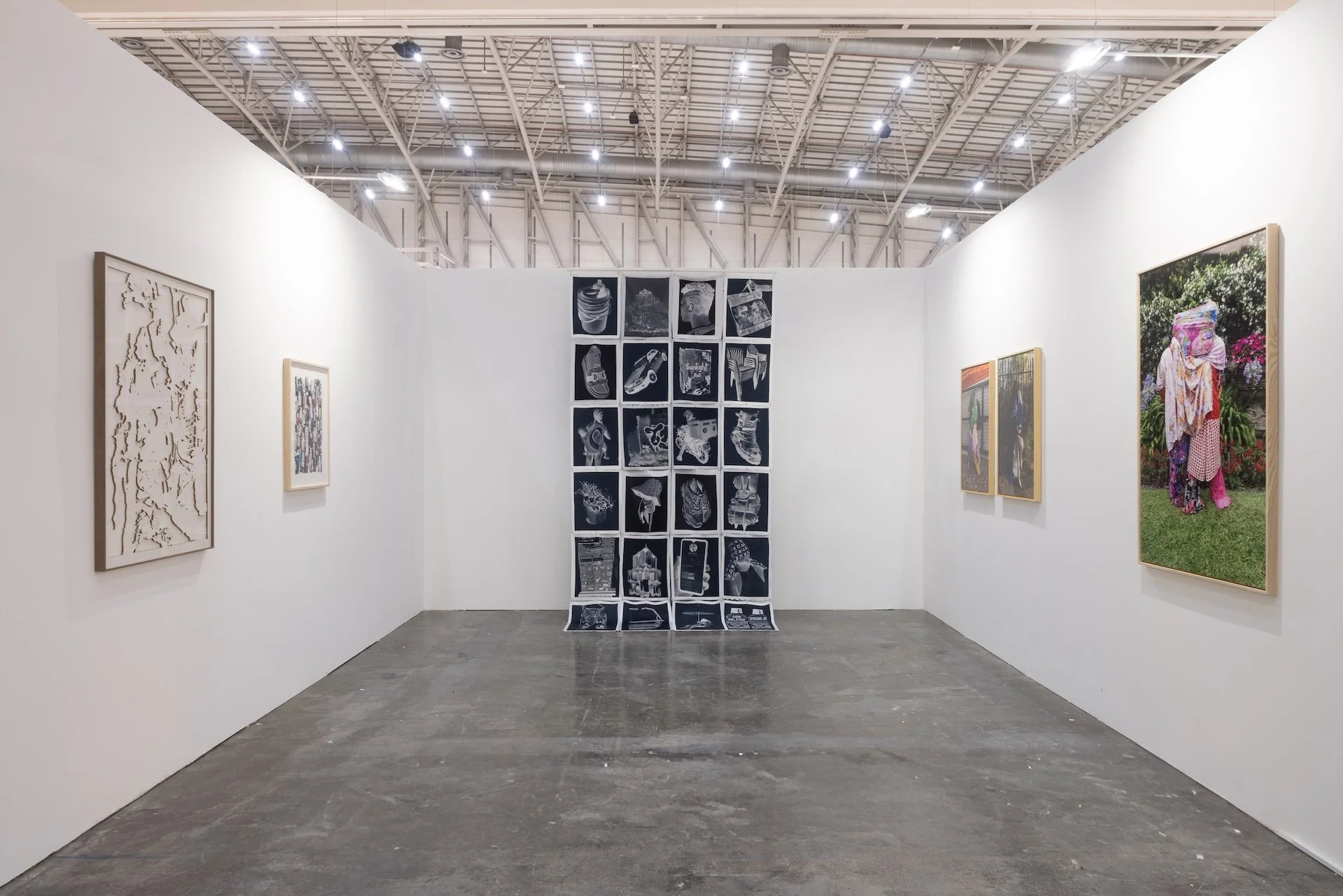
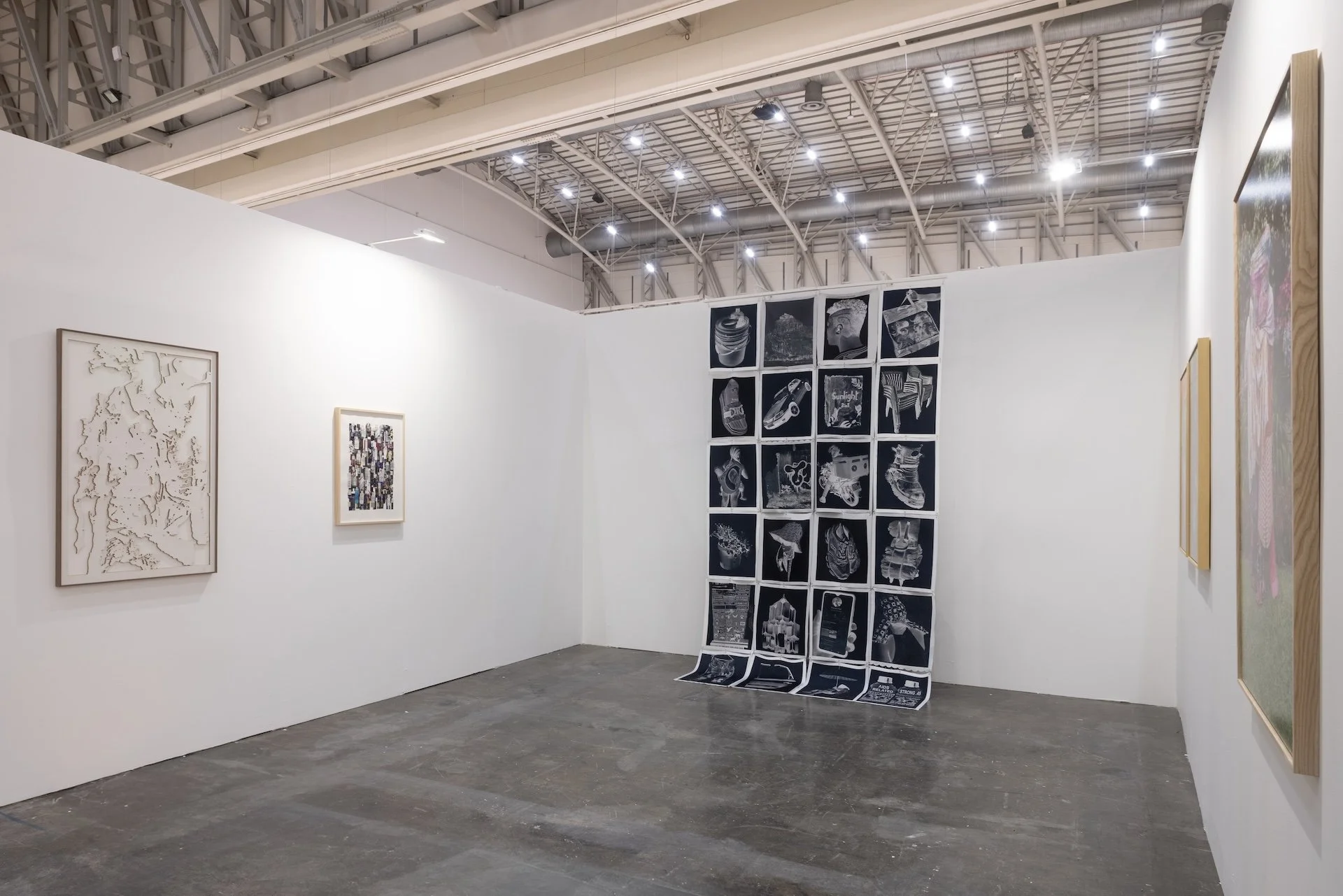
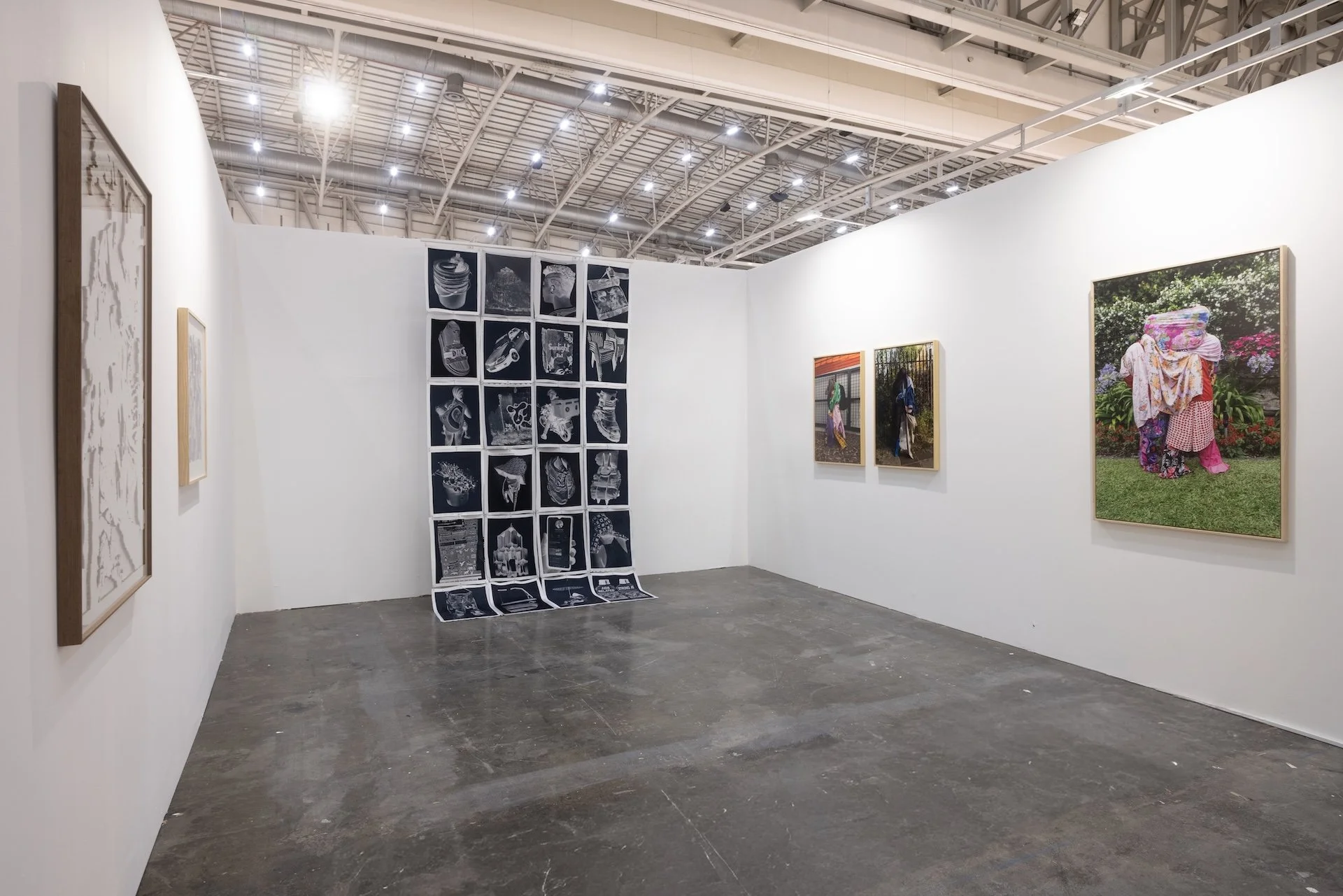
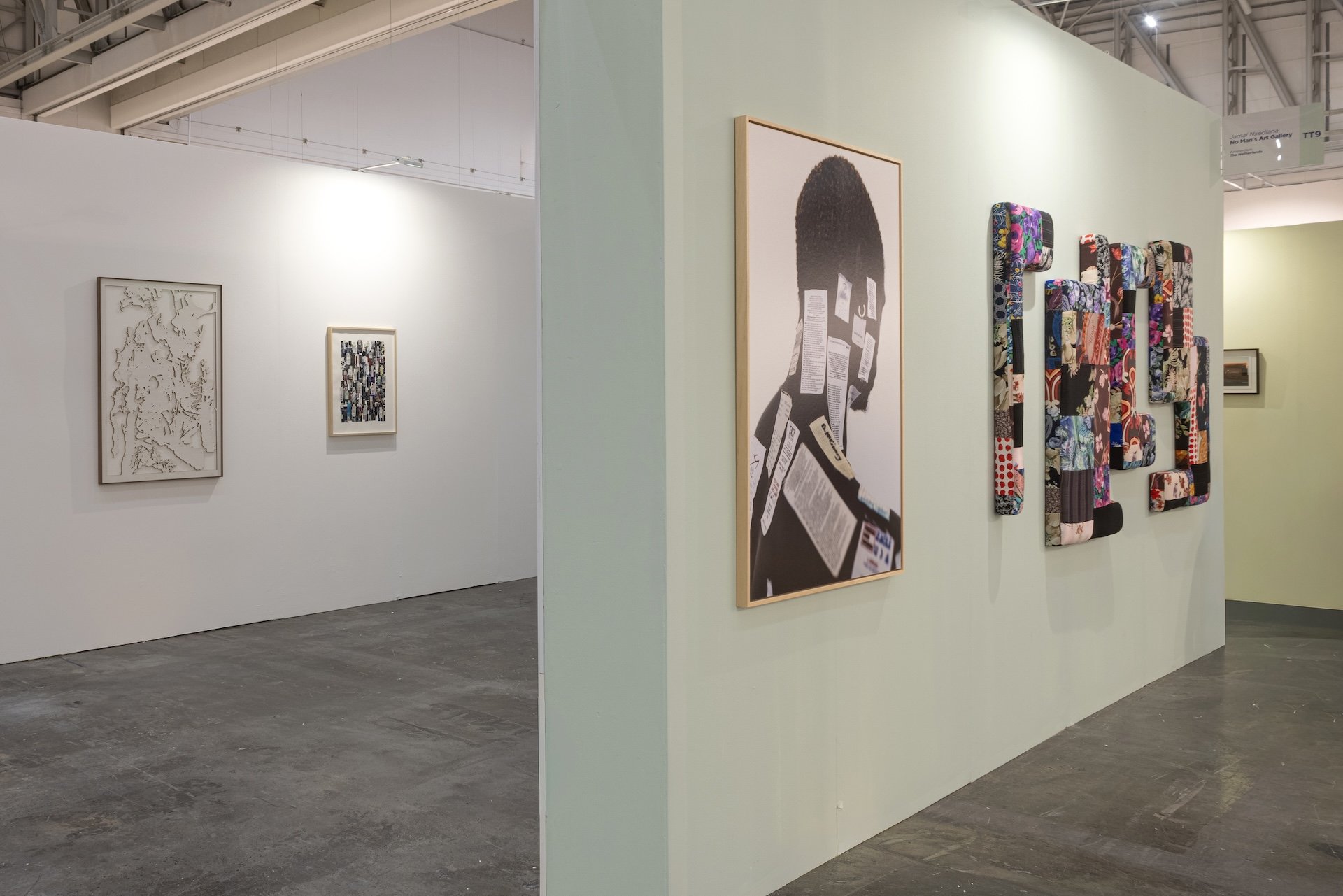
Installation overview of Cape Town Art Fair, 2026. Photo by Gerhardt Coetzee.
Durban-born, Geneva-based artist Jamal Nxedlana has developed his practice by pushing the boundaries of fashion photography to examine Black experience at the intersection of urban life, global trade, textile materiality, and technological systems, pointing at fashion as a social language responsive to postcolonial and post-apartheid legacies shaping urban South Africa today. Grounded in long-term engagement with Johannesburg’s used clothing markets as a field of research, Nxedlana situates his practice within a city marked by overlapping histories of extraction and emancipation, migration and reinvention, where informal economies continue to generate cultural value.
Approaching used clothing as both material and method, Nxedlana examines how contemporary forms of power, value, and identity are produced and negotiated across the Global South and North, particularly in relation to the uneven flows of post-consumer textile waste into African cities. Working through multimedia languages, he treats garments as active carriers of information: not only because they register labour, production, and distribution, but also because they embody desire and socio-political imagination. Thrifting plays a central role in this inquiry, seen as a key site of youth expression and subcultural practices articulating alternative imaginaries beyond hegemonic narratives.
Jamal Nxedlana's project for Tomorrows/Today, THE COTTON SPEAKS, is part of his ongoing research project Data Tapestries, which traces the social and economic infrastructures of second-hand clothing as they move between Western countries and African cities. Developed through sustained engagement with Johannesburg’s thrifting ecosystems, the project reflects on the reconfiguration of popular markets as sites of knowledge archaeology and speculation. Working across textile installation, photography, video, and digital processes object-detection technologies, Nxedlana transforms data drawn from clothing labels, textile specimens, and spatial mapping into raw material for poetic and material reconfiguration. His research unfolds through thrifting as a mapping technique (sporadically visiting, geo-locating, photographing, filming, and pinning used-clothing stores and markets, often intersecting these observations with Google Earth screenshots) producing a fragmented yet generative cartography of circulation, classification, and lived material culture. The resulting constellation of works foregrounds material thinking as a critical and decolonial practice.
The Inversion Archive (2025) is a large-scale textile installation composed of a modular patchwork of sublimation prints on used textiles. Each panel isolates a single object-figure captured as a monochromatic negative snapshot, assembling an archive in process, guided by chance, contingency, and everyday encounters.

Soft Relief is a laser-cut, bonded textile work that extends Nxedlana’s investigation of stains as material, data, and metaphor. Drawing from microscopic images of marks found on discarded garments, the piece translates these traces into abstract, layered textile compositions. While stains are among the primary reasons garments are discarded, here they acquire agency as sites of inscription and material transformation, where textile value is reconfigured rather than lost.
This interest in classification is further developed in a new body of work, A Line of Code for Used Clothing, where the visual grammar of object-detection algorithms is translated into soft, colourful geometric sculptural forms. Produced through the patchworking of printed fabrics selected for their chromatic and graphic qualities, these works stage a tension between algorithmic order and material excess. Across these textile works, acts of cutting, sorting, stitching, and layering mirror both manual labour and computational procedures of organisation.
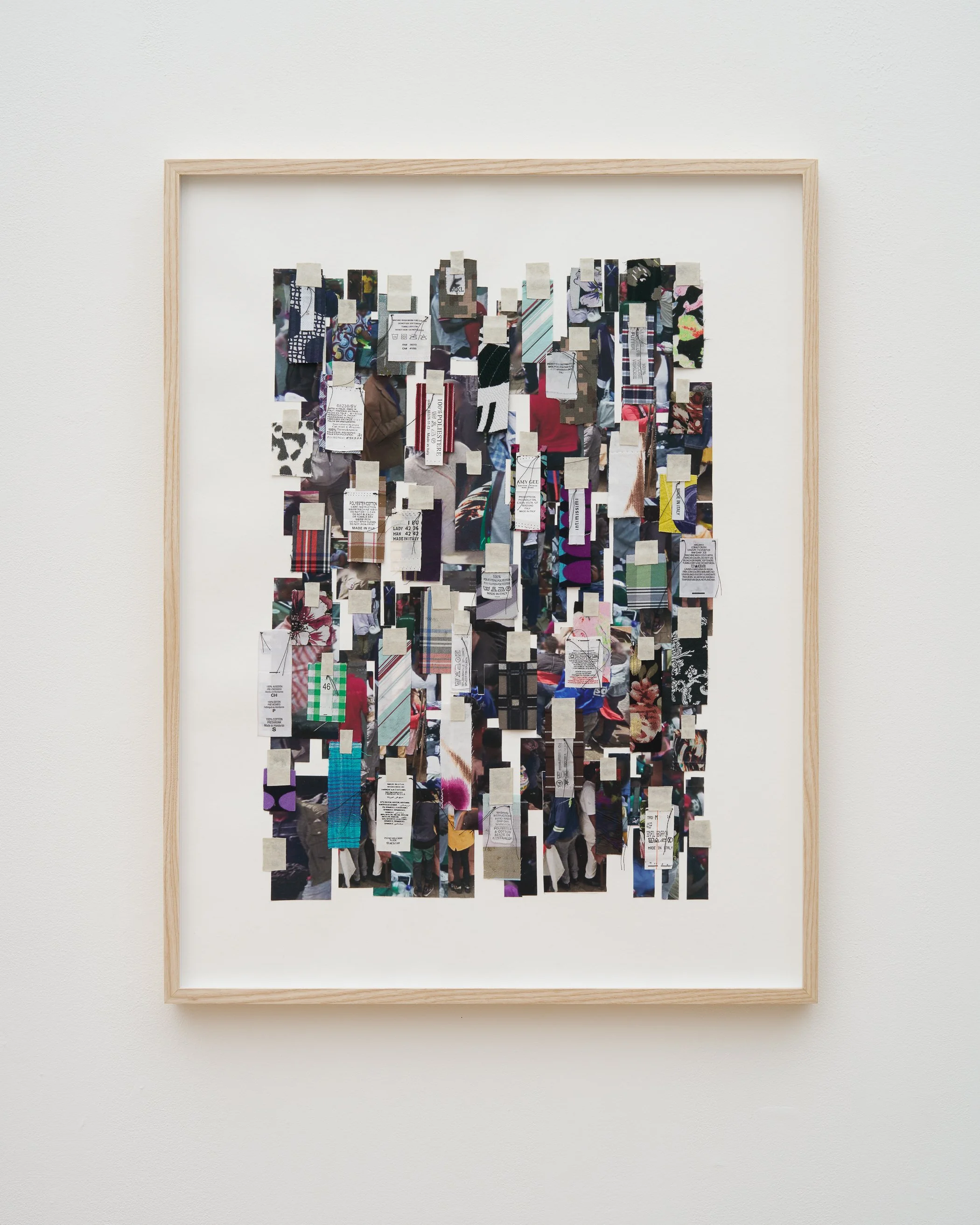
In Computer Vision /02, textile collages on paper foreground labels and printed fragments as cartographic elements, deploying collage as a poetic tactic for registering data collection and spatial mapping. Photography plays a parallel role in articulating these concerns. In Prototype 3 (from the Spectrum series), abstraction resists stereotyping of Black identity, while Zama Zama (from Made in Joburg) situates fashion within landscapes of extraction and disposal, linking sites of consumption to those of waste. These images operate as speculative cues, connecting material culture across geographies, value regimes, and the biographies of wearable objects and garments.
The audio piece, The Cotton Speaks in Joburg, consisting of a shorter version of the sound extracted from the 8-minute video work The Cotton Speaks (2025), extends this investigation through an original soundtrack composed by Zamani Xolo and written by the artist, with lyrics recited together with Thobekile Mbanda. Detached from its visual montage, the work foregrounds sound as material, allowing the textures, rhythms, and cadences of a vibrant social fabric to be experienced through listening rather than sight.
As a project, The Cotton Speaks proposes discarded textiles as provisional structures for thinking: a sort of material imagination through which it becomes possible, following Jacques Rancière, to reconfigure the sensible order and to reimagine the present beyond, and against, hegemonic regimes of truth. As suggested by Mpho Matsipa, the works open a clearing for meaning-making, articulated through a sensorial and philosophical engagement with complex global systems.
Mariella Franzoni